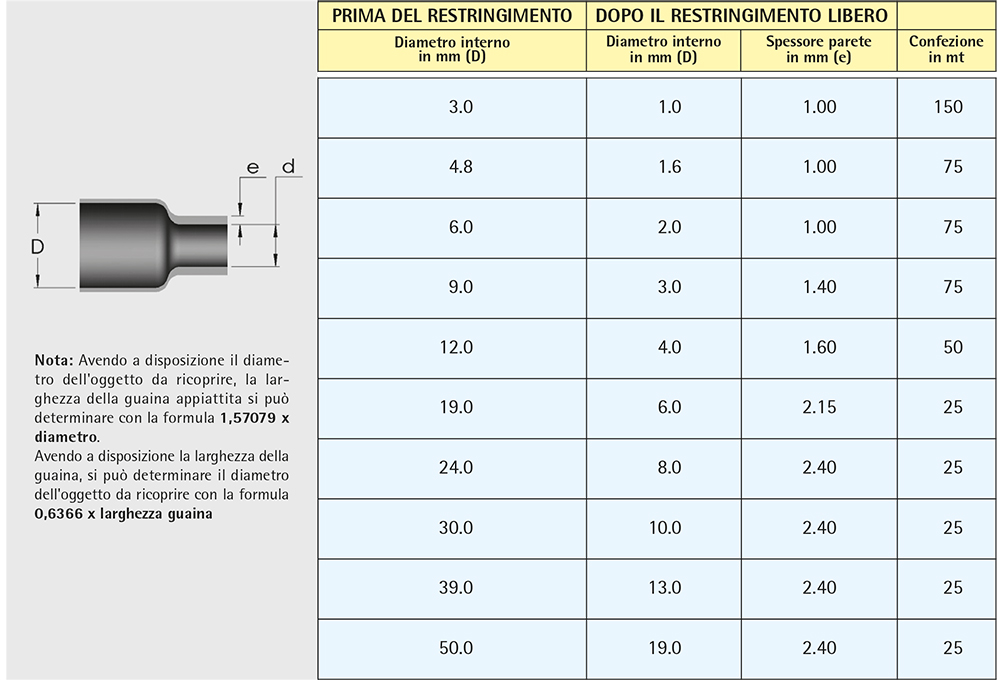
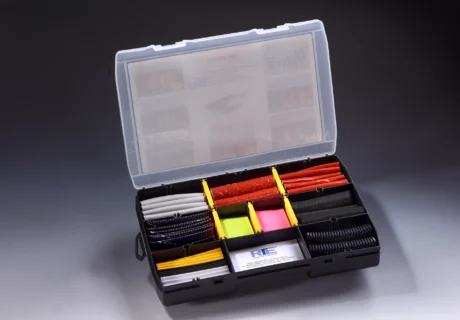
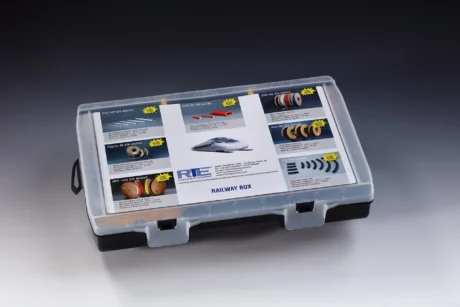
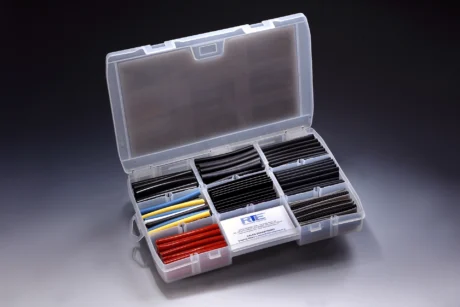
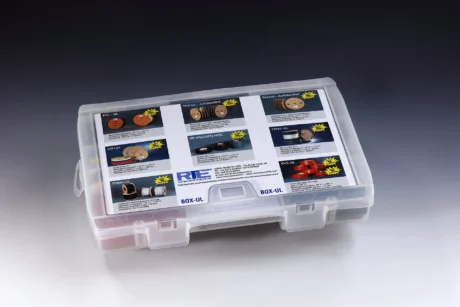
Heat shrink polyolefin sleeve with internal adhesive “TA3155 Series” Automotive shrinkage 3:1
- Material: Polyolefin
- Shrinkage: 3:1
- Scope: Automotive
- Minimum shrinkage temperature: > +100 °C
- Min/max operating temperature: -55°C to +125°C
- Self-extinguishing (except transparent): according to Regulation UL 224 VW-1
- Colors: Black – other colors on request
- Elongation at break: 3oo% according to ASTMD2671
- Elongation after heat aging test: 150% (168 hours at 158°C)
- Fluid resistance: breaking strength 7 MPa, elongation 300% (24 hours at 23°C in diesel and lubricating oil)
- Dielectric strength: 20 kV/mm according to ASTMD150
- Longitudinal variation: from 0% to -10% according to UL224 regulations
- Volume resistivity: 1014 ohm.cm according to ASTMD257
- Thermal shock: no damage (4 hours at 250°C)
- Cold bend test: no crack
- Water absorption: ≤ 0.5%
- Aluminum adhesion: 60 N/25 mm
Heat shrink indication
- For shrinking the heat-shrinking sheath, use equipment made for this specific operation such as, for example, guns or hot air tunnels.
- Shrink the sheath starting at one end, the most critical, and then proceed slowly to the opposite end. This method avoids the formation of air bubbles between the inner wall of the heat shrink sleeve and the object it covers.
- In the event that the object to be covered is made of metal or a good heat conductor, it is advisable to preheat the object to avoid “cold zones”, so as to allow a perfect and soft adaptation of the heat-shrinking sheath.
- In order to avoid overheating of the heat shrink sleeve, ensure a regular heat distribution. Excessive overheating of the material during the shrinking process can cause bubbling, discoloration and in some cases even breakage of the heat shrink sheath.
thermal shrinking sheaths
Frequently Asked Questions
When is the use of heat-shrinkable sheaths with an internal thermal-fuse adhesive recommended?
The use of heat-shrinkable sheaths with internal thermal-fuse adhesive is mainly recommended in the following applications :
- When the part to be protected is located in a very humid environment due to the presence of water, snow or other particularly severe atmospheric agents. The internal thermal-fuse adhesive, which melts during the heating and shrinkage phase, completely envelops the object to be protected, making it watertight.
- When there is a need to improve the sealing between the electric cable and its connector, or between several electric cables and the multi-polar flying connector. This use of heat-shrinkable sheaths with an internal thermal-fuse adhesive is quite useful in minimizing any interruptions in the electrical connections between devices, which in some cases, and especially in certain sectors, can be particularly damaging.
How many types of heat-shrinkable sheaths with internal thermal-fuse adhesive are there?
The main and most requested types are three:
- NORMAL wall thickness, with a shrinkage ratio of 3÷1, Our series TTPA31 – TA3155, or 4÷1, Our series TTPA41 – TA4155, available with internal diameters ranging between 3 mm and 52 mm.
- AVERAGE wall thickness, with a shrinkage ratio of 3÷1, Our TTPAMS series, available with internal diameters ranging between 8 mm and 410 mm.
- HIGH wall thickness, with a shrinkage ratio of 3÷1, our TTPAAS series, available with internal diameters ranging between 9 mm and 310 mm.
What is the most commonly used thermal-fuse adhesive in heat-shrinkable sheaths?
The most commonly used adhesive in heat-shrinkable sheaths with an internal thermal-fuse adhesive is made of "EVA", (ethylene – vinyl – acetate). This type of adhesive is used because on contact with heat it fluidises very quickly, allowing the object to be covered to be wrapped by the adhesive very quickly. Once the heat-shrinkage is finished, the EVA adhesive solidifies just as quickly.